
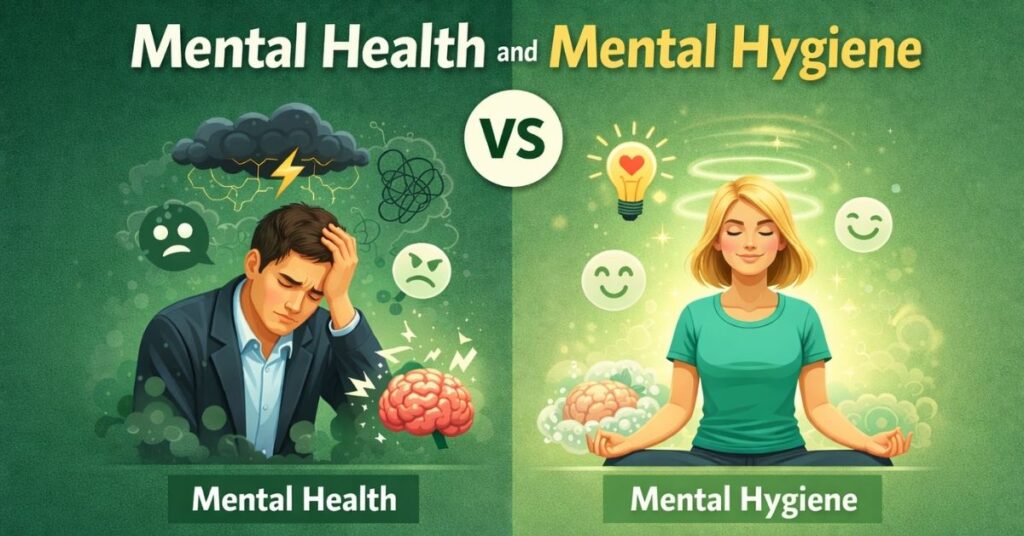
Mental health and mental hygiene may sound similar, but they are not the same. Understanding the difference can improve your well-being.
Mental health refers to your emotional, psychological, and social well-being. It affects how you think, feel, and act. Good mental health helps you handle stress, relate to others, and make choices. On the other hand, mental hygiene involves the daily practices that maintain and improve your mental health.
It includes habits like exercise, healthy eating, and stress management. Knowing the difference between these two concepts is essential for a balanced life. This blog post will clarify these terms, helping you understand their roles and importance. Whether you’re looking to boost your mental health or adopt better mental hygiene practices, this guide will provide valuable insights.
Introduction To Mental Health And Mental Hygiene
Mental health and mental hygiene are two important concepts. They are often confused with each other. Understanding the difference is key for maintaining a balanced life. This introduction will provide insight into both terms and their significance.
Importance Of Mental Well-being
Mental well-being is crucial for a happy and productive life. It affects how we think, feel, and act. Good mental health helps handle stress, relate to others, and make choices.
Neglecting mental health can lead to serious issues. Anxiety, depression, and other disorders can arise. Therefore, maintaining mental health is as important as physical health.
Brief History
The concept of mental health has evolved over time. Ancient civilizations had various beliefs about mental disorders. They often linked them to spiritual causes.
In the 19th century, mental health began to be understood scientifically. Hospitals and asylums were established for treatment. The 20th century saw more humane approaches. Psychotherapy and medications became more common.
Mental hygiene emerged as a term in the early 20th century. It focused on preventing mental illness and maintaining mental health. Education and early intervention were key aspects.
Today, both mental health and mental hygiene are recognized as essential. They are promoted through public health campaigns and personal practices.
Table: Key Differences
| Aspect | Mental Health | Mental Hygiene |
|---|---|---|
| Definition | State of well-being | Practices to maintain well-being |
| Focus | Overall mental state | Preventive measures |
| Approach | Treatment and therapy | Education and habits |
Defining Mental Health
Mental health is a crucial aspect of overall well-being. Understanding its definition helps in recognizing its importance. Mental health encompasses our emotional, psychological, and social well-being. It affects how we think, feel, and act. Good mental health enables us to handle stress, relate to others, and make decisions.

Components Of Mental Health
Several components make up mental health. Emotional well-being is one. It involves understanding and managing our emotions. Psychological well-being includes having a positive outlook and a sense of purpose. Social well-being involves building and maintaining healthy relationships. Each component contributes to overall mental health.
Common Mental Health Disorders
Some common mental health disorders include anxiety and depression. Anxiety disorders cause excessive fear or worry. Depression leads to persistent sadness and loss of interest. Both conditions affect daily functioning. Other common disorders are bipolar disorder and schizophrenia. Bipolar disorder involves extreme mood swings. Schizophrenia affects thinking and perception. Recognizing these disorders is key to seeking help.
Understanding Mental Hygiene
Mental hygiene is a crucial aspect of our overall well-being. It involves daily practices that help maintain and improve our mental health. By understanding mental hygiene, we can create a balanced and healthy mindset. This can lead to a more fulfilling and stress-free life.
Principles Of Mental Hygiene
Mental hygiene focuses on several key principles. These principles guide us to better mental health. They include self-awareness, stress management, and emotional regulation. Self-awareness helps us understand our thoughts and feelings. This awareness allows us to address negative patterns and behaviors.
Stress management is another vital principle. It involves techniques to reduce and cope with stress. This can include deep breathing, exercise, or taking breaks. Emotional regulation means managing our emotions effectively. It helps in maintaining emotional balance and resilience.
Practices For Daily Life
Incorporating mental hygiene practices into daily life is essential. Start with simple habits like regular exercise. Physical activity boosts mood and reduces stress. Another practice is maintaining a healthy sleep routine. Adequate sleep is crucial for mental clarity and emotional stability.
Mindfulness and meditation are also effective practices. These techniques help in staying present and reducing anxiety. Journaling is another helpful tool. Writing down thoughts and feelings can provide clarity and insight. Social connections are vital too. Spending time with loved ones enhances emotional well-being.
Finally, set aside time for hobbies and interests. Engaging in activities you enjoy can relieve stress. It also promotes a positive outlook on life. By adopting these daily practices, you can maintain good mental hygiene and overall well-being.
Mental Health Vs. Mental Hygiene
Mental health and mental hygiene are related concepts. People often confuse them. Understanding their differences is important. It helps in promoting well-being.
Core Differences
Mental health refers to your emotional and psychological state. It involves your thoughts, feelings, and behaviors. Good mental health means being able to cope with stress. It allows you to function effectively in daily life.
Mental hygiene, on the other hand, is about practices. These practices maintain and improve mental health. Think of it as the habits you adopt. These habits help prevent mental health issues. Examples include regular exercise, meditation, and a balanced diet.
Similarities And Overlaps
Mental health and mental hygiene are interconnected. Both aim to improve your overall well-being. Good mental hygiene practices lead to better mental health. They work hand in hand. For instance, managing stress through relaxation techniques boosts mental health.
Both concepts emphasize the importance of self-care. They highlight the need for a balanced lifestyle. This includes physical, emotional, and social aspects.
Role Of Mental Hygiene In Maintaining Mental Health
Mental hygiene plays a crucial role in maintaining mental health. It involves daily practices that promote emotional well-being. Just as physical hygiene helps our bodies stay healthy, mental hygiene ensures our minds stay sharp and resilient.

By incorporating mental hygiene into our routines, we can prevent mental health issues. This, in turn, enhances our overall quality of life. Let’s explore the specific preventive measures and long-term benefits of mental hygiene.
Preventive Measures
Mental hygiene includes simple habits that prevent stress and anxiety. These habits include regular exercise, adequate sleep, and balanced nutrition. They also involve mindfulness techniques like meditation and deep-breathing exercises. Such practices help manage daily stress and avoid burnout.
Engaging in hobbies and social activities also supports mental hygiene. These activities provide relaxation and a sense of community. They help create a balanced life, reducing the risk of mental health problems.
Long-term Benefits
Practicing mental hygiene offers long-term benefits for mental health. It builds emotional resilience, helping us cope with life’s challenges. This resilience reduces the risk of developing mental health disorders.
Improved mental hygiene also enhances cognitive function. It boosts memory, concentration, and decision-making skills. Over time, these benefits contribute to a fulfilling and productive life.
In essence, mental hygiene ensures lasting mental health. It empowers us to live happier, healthier lives.
Impact Of Poor Mental Hygiene
Poor mental hygiene leads to stress and anxiety. Mental health refers to overall emotional well-being, while mental hygiene involves daily practices to maintain that well-being. Neglecting mental hygiene can worsen mental health issues.
Poor mental hygiene can lead to several negative outcomes. Just like physical hygiene, mental hygiene is crucial for overall well-being. Ignoring it can have serious repercussions on mental health.
Potential Consequences
Not maintaining good mental hygiene can lead to increased stress levels. Chronic stress can cause anxiety and depression. It can also weaken the immune system, making the body more susceptible to illness. Mental fatigue is another consequence. It can impair cognitive functions such as memory and concentration. This can affect work performance and personal relationships. Unmanaged poor mental hygiene can lead to burnout. Burnout is a state of emotional, physical, and mental exhaustion. It often comes from prolonged stress and can severely impact quality of life.
Signs To Watch For
Watch for frequent mood swings. These can indicate underlying mental health issues. Feeling overwhelmed by daily tasks is another sign. It may suggest you need to improve your mental hygiene. Pay attention to changes in sleep patterns. Poor sleep can be both a cause and a symptom of poor mental hygiene. Notice if you are isolating yourself from social activities. Isolation can worsen mental health issues. Look out for physical symptoms. These can include headaches and stomach issues. Often, the body reacts to mental stress through physical symptoms. Recognizing these signs early can help in taking corrective actions. “`
Strategies To Improve Mental Hygiene
Mental hygiene involves practices that help maintain psychological well-being. It is about nurturing a healthy mind. Simple habits can make a big difference. Let’s explore effective strategies to improve mental hygiene.
Daily Habits
Small daily habits can have a significant impact on mental hygiene. Here are some tips:
- Mindful Breathing: Practice deep breathing for five minutes each day.
- Healthy Eating: Consume balanced meals with fruits and vegetables.
- Regular Exercise: Engage in at least 30 minutes of physical activity.
- Good Sleep: Aim for 7-8 hours of quality sleep every night.
- Journaling: Write down thoughts and feelings to manage stress.
Professional Help
Sometimes, daily habits aren’t enough. Professional help can be crucial. Consider these options:
| Type | Description |
|---|---|
| Therapy | Talking to a licensed therapist can provide support and coping strategies. |
| Counseling | Counselors offer guidance and can help with specific issues like grief. |
| Support Groups | Joining a support group can provide a sense of community and shared experiences. |
| Medication | In some cases, medication prescribed by a psychiatrist can help manage symptoms. |
Seeking professional help is a sign of strength. It shows a commitment to one’s mental hygiene.
Frequently Asked Questions
- What Is Mental Health?
Mental health refers to emotional, psychological, and social well-being. It impacts how we think, feel, and act. Good mental health is crucial for overall well-being. - What Is Mental Hygiene?
Mental hygiene involves practices to maintain mental health. These include stress management, healthy habits, and self-care routines. It aims to prevent mental health issues. - How Are Mental Health And Mental Hygiene Related?
Mental hygiene supports mental health by promoting positive habits and routines. It helps maintain emotional and psychological well-being, preventing mental health problems. - Why Is Mental Hygiene Important?
Mental hygiene is vital for preventing mental health issues. It promotes emotional stability, reduces stress, and enhances overall well-being. Regular mental hygiene practices lead to a healthier mind.
Conclusion
Understanding the difference between mental health and mental hygiene is important. Mental health refers to your overall psychological well-being. Mental hygiene involves practices to maintain mental health. Both aspects are crucial for a balanced life. Prioritize mental health by practicing good mental hygiene daily.
Simple habits like mindfulness and regular exercise help. Seek professional help if needed. Remember, caring for your mind is as important as caring for your body. Your mental well-being affects every part of your life. Make mental hygiene a part of your routine for a healthier, happier you.