
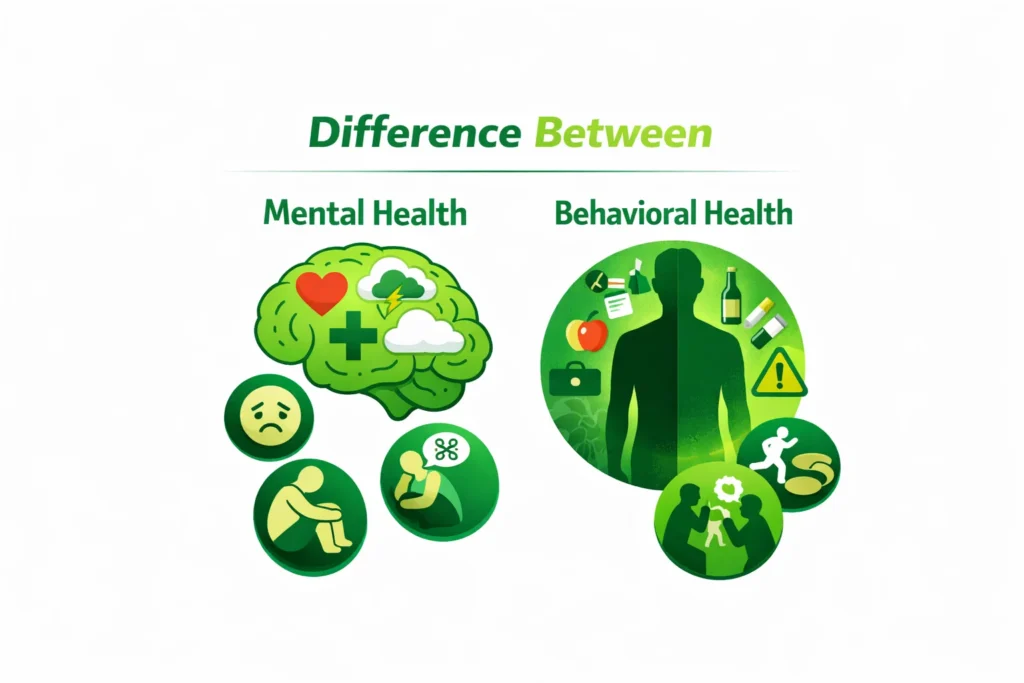
Mental health and behavioral health are often used interchangeably, but they are not the same. Understanding their differences is key to seeking proper help and support.
Mental health focuses on emotional, psychological, and social well-being. It affects how we think, feel, and act. Behavioral health, on the other hand, covers a broader scope. It includes habits, actions, and routines that impact overall wellness. While mental health is a part of behavioral health, the latter also considers behaviors like substance use and lifestyle choices.
Knowing these distinctions helps in addressing specific issues more effectively. This blog will dive into the details, helping you understand both terms better.
Mental Health Basics
Mental health is a vital part of our overall well-being. It includes our emotional, psychological, and social health. Understanding mental health basics helps you recognize the importance of maintaining good mental health.

Mental Health Definition
Mental health is about how you think, feel, and act. It affects how you handle stress, relate to others, and make choices. Everyone has mental health, just like we all have physical health.
Good mental health means feeling good about yourself and being able to cope with life’s challenges. It does not mean being happy all the time. It’s normal to feel sad or angry sometimes. But it’s important to know how to manage these feelings.
Common Mental Health Disorders
Many people experience mental health issues at some point in their lives. Here are some common mental health disorders:
- Depression: Feeling very sad for a long time. Loss of interest in activities you once enjoyed.
- Anxiety: Constant worry or fear. It can interfere with daily activities.
- Bipolar Disorder: Extreme mood swings. From high (mania) to low (depression).
- Schizophrenia: Affects how a person thinks, feels, and behaves. May seem like they have lost touch with reality.
- Post-Traumatic Stress Disorder (PTSD): Anxiety and flashbacks triggered by a traumatic event.
Recognizing these disorders is the first step to getting help. Each disorder has its own symptoms and can affect people differently. Early treatment can help manage these conditions effectively.
If you or someone you know is struggling, seek help from a mental health professional. They can provide support and treatment options tailored to your needs.
Behavioral Health Fundamentals
Understanding the fundamentals of behavioral health is crucial. It encompasses how behaviors impact physical and mental well-being. Unlike mental health, which focuses on thoughts and emotions, behavioral health looks at actions and habits. These behaviors can either improve or harm overall health.
Behavioral Health Definition
Behavioral health refers to the connection between behaviors and overall health. It includes habits that affect mental and physical wellness. Examples are eating habits, exercise routines, and substance use. It also covers behaviors like sleep patterns and stress management. The goal is to create healthier habits for a better life.
Examples Of Behavioral Health Issues
Many issues fall under behavioral health. One common issue is substance abuse. This includes the misuse of alcohol, drugs, and other substances. Another example is eating disorders. These involve unhealthy eating habits that impact health. Obesity and anorexia are both types of eating disorders.
Sleep disorders also affect behavioral health. Poor sleep can lead to stress and other health problems. Another issue is chronic stress. It can cause physical and mental health issues over time. Managing stress through healthy behaviors is essential for well-being.
Key Differences
Mental health and behavioral health are often used interchangeably, but they are not the same. Understanding the key differences between the two can help in identifying the right kind of support and treatment.
Focus Areas
Mental health primarily deals with a person’s emotional and psychological state. It covers conditions like depression, anxiety, and bipolar disorder. Behavioral health, on the other hand, focuses on how habits impact overall well-being. This includes substance abuse, eating disorders, and other behavioral issues.
Approaches To Treatment
Treatment for mental health issues often involves therapy and medication. This can include counseling sessions, antidepressants, or antipsychotics. Behavioral health treatment usually combines therapy with lifestyle changes. This could mean cognitive-behavioral therapy, support groups, or rehabilitation programs.
Interconnectedness
Understanding the interconnectedness of mental health and behavioral health is crucial. Both areas affect each other deeply. While mental health focuses on emotional and psychological well-being, behavioral health looks at how behaviors impact overall health. Recognizing their relationship helps in providing better care.
How Mental And Behavioral Health Influence Each Other
Mental health can affect behavior. For example, depression might lead to social withdrawal. Similarly, anxiety can cause avoidance behaviors. Behavioral health issues, like substance abuse, can worsen mental health conditions. This creates a cycle that can be hard to break without proper intervention.
Consider these examples:
- Depression: Can lead to poor hygiene, affecting physical health.
- Anxiety: May cause avoidance of social situations, increasing isolation.
- Substance Abuse: Can worsen anxiety and depression, creating a vicious cycle.
Both mental and behavioral health need attention for overall well-being. Treatment often requires a combined approach.
Case Studies
Examining case studies helps understand the interconnectedness better. Below are two examples:
| Case Study | Mental Health Condition | Behavioral Health Impact |
|---|---|---|
| Case 1 | John has severe depression | John starts drinking heavily |
| Case 2 | Sarah suffers from anxiety | Sarah avoids social gatherings |
John felt extreme sadness and hopelessness. This led him to drink alcohol to cope. His drinking worsened his depression, making it harder to seek help.
Sarah experienced intense anxiety, especially in social settings. She began avoiding people and events. This behavior increased her sense of isolation, feeding her anxiety.
These examples show the significant impact of one aspect on the other. Addressing both mental and behavioral health is key to effective treatment.
Mental Health Professionals
Mental health professionals play a vital role in our well-being. They help us understand and manage our mental and behavioral health. Knowing the difference between mental health and behavioral health is essential. It helps us seek the right professional support.

Types Of Mental Health Experts
There are various types of mental health professionals. Each has a unique role and specialization. Here are some common ones:
- Psychiatrists: Medical doctors specializing in mental health. They can prescribe medications.
- Psychologists: Experts in therapy and counseling. They often have a Ph.D. or Psy.D.
- Clinical Social Workers: Professionals with a master’s degree in social work. They provide therapy and support.
- Counselors: Trained in providing talk therapy. They often hold a master’s degree in counseling.
- Psychiatric Nurses: Registered nurses with specialized training in mental health. They can provide treatment and support.
When To Seek Help
Recognizing when to seek help is crucial. Here are some signs you might need support:
- Feeling sad or anxious for long periods.
- Changes in sleep or eating patterns.
- Difficulty concentrating or making decisions.
- Withdrawing from friends and family.
- Experiencing mood swings or anger.
If you notice these signs, consider reaching out to a mental health professional. Early intervention can make a big difference. Don’t hesitate to seek help when you need it.
Behavioral Health Specialists
Behavioral health specialists play a crucial role in mental well-being. They help people manage behaviors that affect mental health. Understanding their roles and methods can provide clarity.
Roles And Responsibilities
Behavioral health specialists assess and diagnose behavioral issues. They develop treatment plans tailored to each individual’s needs. Their goal is to improve emotional and mental health.
They work with patients of all ages. Some specialize in certain age groups or specific conditions. They provide therapy and support for various issues. These include anxiety, depression, and substance abuse.
Behavioral health specialists collaborate with other professionals. They may work with doctors, nurses, and social workers. This teamwork ensures comprehensive care for patients.
Treatment Methods
Behavioral health specialists use different treatment methods. One common approach is cognitive-behavioral therapy (CBT). CBT helps patients identify and change negative thought patterns.
Another method is dialectical behavior therapy (DBT). DBT teaches coping skills to manage stress and regulate emotions. Group therapy is also popular. It provides a support network and helps patients learn from others.
Medication management is sometimes necessary. Specialists might work with psychiatrists to prescribe and monitor medications. They also use lifestyle changes as part of treatment. This can include exercise, nutrition, and sleep improvement.
Behavioral health specialists adapt their methods to each patient. They aim to provide the best possible care and support. Their work is vital for improving mental and emotional health.
Impact On Daily Life
Understanding the difference between mental health and behavioral health is crucial. Both affect daily life but in different ways. Mental health involves emotions, thoughts, and well-being. Behavioral health focuses on actions and habits. Let’s explore how these aspects impact work and relationships.
Effects On Work
Mental health issues can lead to problems at work. Common issues include:
- Poor concentration
- Low energy
- Increased absenteeism
These challenges can reduce productivity. Someone with anxiety might struggle with deadlines. A person with depression might find it hard to get out of bed. Behavioral health issues, like substance abuse, can also affect work. They may lead to frequent breaks or erratic behavior.
Effects On Relationships
Both mental and behavioral health issues can strain relationships. Here are some ways:
| Aspect | Impact |
|---|---|
| Mental Health | May cause mood swings, leading to misunderstandings. |
| Behavioral Health | Can lead to trust issues, especially with addictive behaviors. |
Communication becomes difficult. A person with depression may isolate themselves. Someone with a behavioral issue might lie about their actions. These behaviors create distance. They make it hard to maintain healthy relationships.
Support And Resources
Understanding the difference between mental health and behavioral health is crucial. Both need support and resources to help individuals lead better lives. Here, we’ll explore the available services and support networks for each.
Available Services
Both mental health and behavioral health offer a range of services. These services cater to specific needs and conditions.
| Service Type | Mental Health | Behavioral Health |
|---|---|---|
| Therapy | Cognitive Behavioral Therapy (CBT), Dialectical Behavior Therapy (DBT) | Behavioral Therapy, Substance Abuse Counseling |
| Medication | Antidepressants, Antipsychotics | Medication-Assisted Treatment (MAT) |
| Community Programs | Support Groups, Crisis Intervention | Rehabilitation Programs, Behavioral Workshops |
Support Networks
Support networks play a vital role in both areas. A strong support network can significantly improve outcomes.
- Family and Friends: Emotional support, understanding, and encouragement.
- Support Groups: Shared experiences, coping strategies, and solidarity.
- Healthcare Professionals: Regular check-ins, professional advice, and treatment plans.
Building a reliable support network is essential. It provides a safety net and fosters a sense of community.
Frequently Asked Questions
- What Is Mental Health?
Mental health refers to our emotional, psychological, and social well-being. It affects how we think, feel, and act. Good mental health helps us handle stress, relate to others, and make choices. - What Is Behavioral Health?
Behavioral health focuses on how behaviors impact well-being. It includes mental health and substance abuse. It addresses habits like eating, drinking, and exercising. Behavioral health professionals help change harmful behaviors. - How Do Mental And Behavioral Health Differ?
Mental health focuses on emotional and psychological well-being. Behavioral health includes mental health but also looks at habits and behaviors. Both are essential for overall health. - Why Is Mental Health Important?
Mental health affects how we think, feel, and act. Good mental health helps manage stress, build relationships, and make decisions. It is crucial for overall well-being.
Conclusion
Understanding the difference between mental health and behavioral health is essential. Mental health focuses on emotional and psychological well-being. Behavioral health includes actions that impact overall health. Both are important for a balanced life. Recognizing their distinctions helps in seeking appropriate care.
Prioritize your well-being by staying informed. Proper support can lead to a healthier, happier life. Remember, taking care of your mind and behavior is crucial. Stay proactive in managing your health. Seek help when needed. Embrace a healthier future by understanding these key aspects.